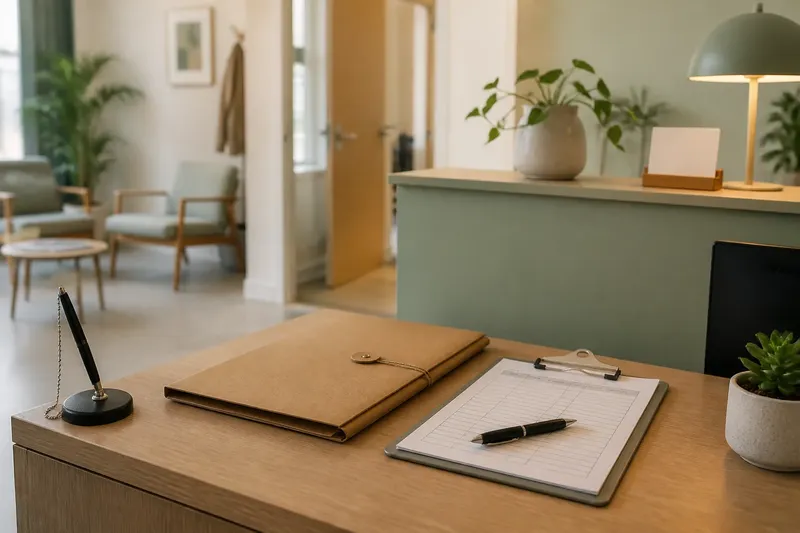
A Room Should Tell You Who Uses It
A room should tell you who uses it through layout, routine and deliberate choices, helping filmmakers make an invented interior feel credible before dialogue.
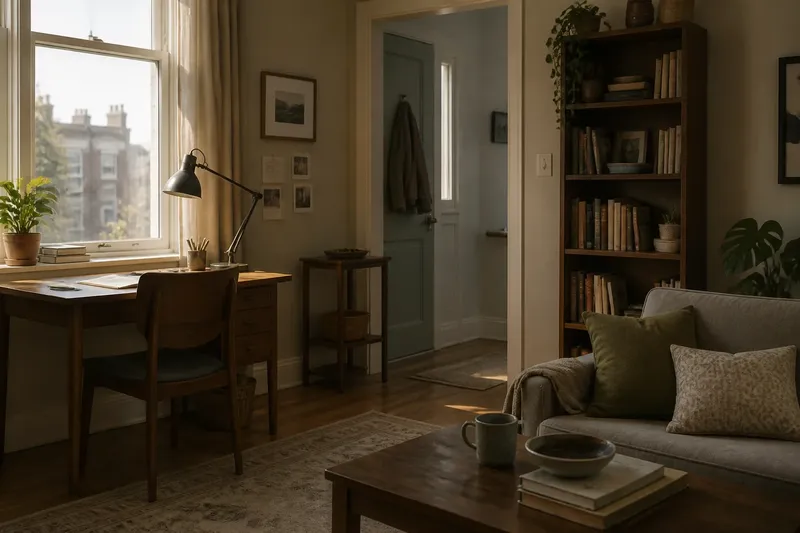
A room should tell you who uses it through the choices that shape its space. In film, a chair placed to face a window or a desk turned away from a busy doorway can establish how an occupant wants to work, rest or keep watch. The arrangement gives the audience a readable point of view before dialogue supplies an explanation.
Credibility does not depend on making an interior look untidy or old. It comes from the relationship between the room and the person who uses it: which activities have a place, what is kept in sight, and what is screened off. A useful set feels less like a collection of clues than a floor plan shaped by someone’s priorities.
Layout reveals what matters in the room
The placement of large objects sets the terms of a space. A table between the door and the window creates a different passage from one pushed against a wall; a chair facing the entrance makes a different claim from one turned towards a bookcase. These choices guide both movement and attention.
For a production designer, the question is not simply where furniture fits. It is what the occupant has made easy, difficult or private. A narrow path to the kitchen might reflect a room shared with other people, while a writing desk positioned to overlook the street might suggest that watching outside matters as much as working.
That logic also helps actors move with purpose. If the kettle, cups and sink form a clear working area, a character can make tea without searching the room. The audience may not consciously map the arrangement, but it will sense when actions have somewhere to go.
Routine can be suggested through object relationships
Objects become informative when their positions imply a sequence. A book beside a reading lamp says more if the chair is turned towards it; a bowl near the front door makes more sense if it holds keys. The details work together like a set of directions on a familiar map.
Say an invented character checks the post before leaving for work but rarely sits down to read it. The designer places a shallow tray on a narrow table beside the exit, with a coat hook above it and a clear route to the door. If the character drops a letter into the tray while reaching for a coat, the audience can infer the routine without a spoken explanation; the scene can then make a newly opened envelope conspicuous by changing that established pattern.
A room need not display every part of a habit. One well-chosen relationship may be enough to suggest the rest, especially if the scene is busy with dialogue or movement. Like setting a place at a table, the arrangement indicates what is expected without narrating each action.
Shared spaces need more than one point of view
A shared kitchen or sitting room can feel specific without assigning the whole space to one occupant. Different people may have distinct ways of using the same table, or one may keep a route clear while another leaves a project where it can be resumed. Such contrasts can establish relationships without turning the room into a diagram of personality types.
Production design can show accommodation as well as conflict. A chair angled to leave space for a walking aid, or a shelf arranged so that two people can reach frequently used items, may suggest care built into the household. The detail should be supported by the scene’s wider behaviour rather than treated as a self-explanatory symbol.
When several habits compete, choose which one matters at that moment. The camera may follow one character through the room while the background quietly preserves another’s arrangement. This keeps the shared space legible without pretending that only one person has shaped it.
Order and empty space can carry character
A carefully arranged room can make control, privacy or concentration visible. A clear desk with one notebook open suggests a different working preference from a surface covered with unfinished tasks. Neither arrangement is inherently more credible; the point is whether it fits the character and the demands of the scene.
Absence can matter when the room establishes what normally belongs there. An empty space on a shelf may draw attention if the objects around it form a deliberate arrangement; without that context, it may read as a gap with no particular meaning. The set should give viewers enough information to notice a change, not dictate exactly what to feel about it.
Consider the camera’s view as well as the character’s habits. A precise arrangement may be clear to the occupant but invisible from the chosen angle. If the scene depends on that detail, its position, contrast and relation to the actor’s movement should make it readable without requiring an unnatural pause.
How should a room establish a character?
What should production design decide first?
Begin with the scene’s action and the occupant’s priorities. Decide what the character needs to reach, avoid or keep private, then arrange the room so those choices affect movement.
Can an ordinary room feel distinctive?
Yes. Familiar furniture can feel particular when its placement reflects a clear preference or constraint. The arrangement, rather than an unusual collection of objects, can give a room its identity.
How can a set suggest history without explaining it?
Let present choices imply a past without spelling it out. A room may suggest that its occupant works late or avoids the front window, while leaving the reasons for those habits unresolved.
What makes a detail too obvious?
A detail feels overstated when it announces a single interpretation that the scene has not earned. If an object’s meaning depends on a close-up or explanatory line, consider whether its placement can instead support an action the audience can observe.
Keep the practical choices coherent
Before finalising a set, review the room from the actor’s route and the camera’s likely view. Check whether the main action has a plausible path, whether the important objects are visible, and whether any detail appears to serve the audience rather than the occupant. Each result points to a different decision: adjust the layout for movement, reposition an object for legibility, or remove a detail that has no practical place in the room.
- Check the entrance route: if furniture blocks the character’s natural path, then shift it to make the action possible; otherwise, keep the route and use a deliberate obstruction only if the scene needs one.
- Check the reach between related objects: if the next action requires an implausible stretch, then move the objects closer; otherwise, preserve their positions as a credible sequence.
- Check what the camera can see: if the defining arrangement is hidden from the scene’s viewpoint, then change its angle or placement; otherwise, let it remain part of the background.
- Check whether the room serves multiple occupants: if one person’s setup makes another’s ordinary use impossible, then give both routines space or make the conflict intentional; otherwise, retain the shared arrangement.
- Check whether an empty area has context: if no surrounding choice makes the gap noticeable, then give it a clear relation to the room or remove its implied significance; otherwise, let the absence register quietly.
- Check whether each prominent object supports an action: if an item has no plausible place in the occupant’s routine, then relocate or remove it; otherwise, keep it as part of the room’s practical logic.
A room becomes convincing when its choices work together. Layout directs movement, object relationships suggest routine, and open space can mark a boundary or a change. The strongest details do not have to explain a character; they give the character something credible to do.